




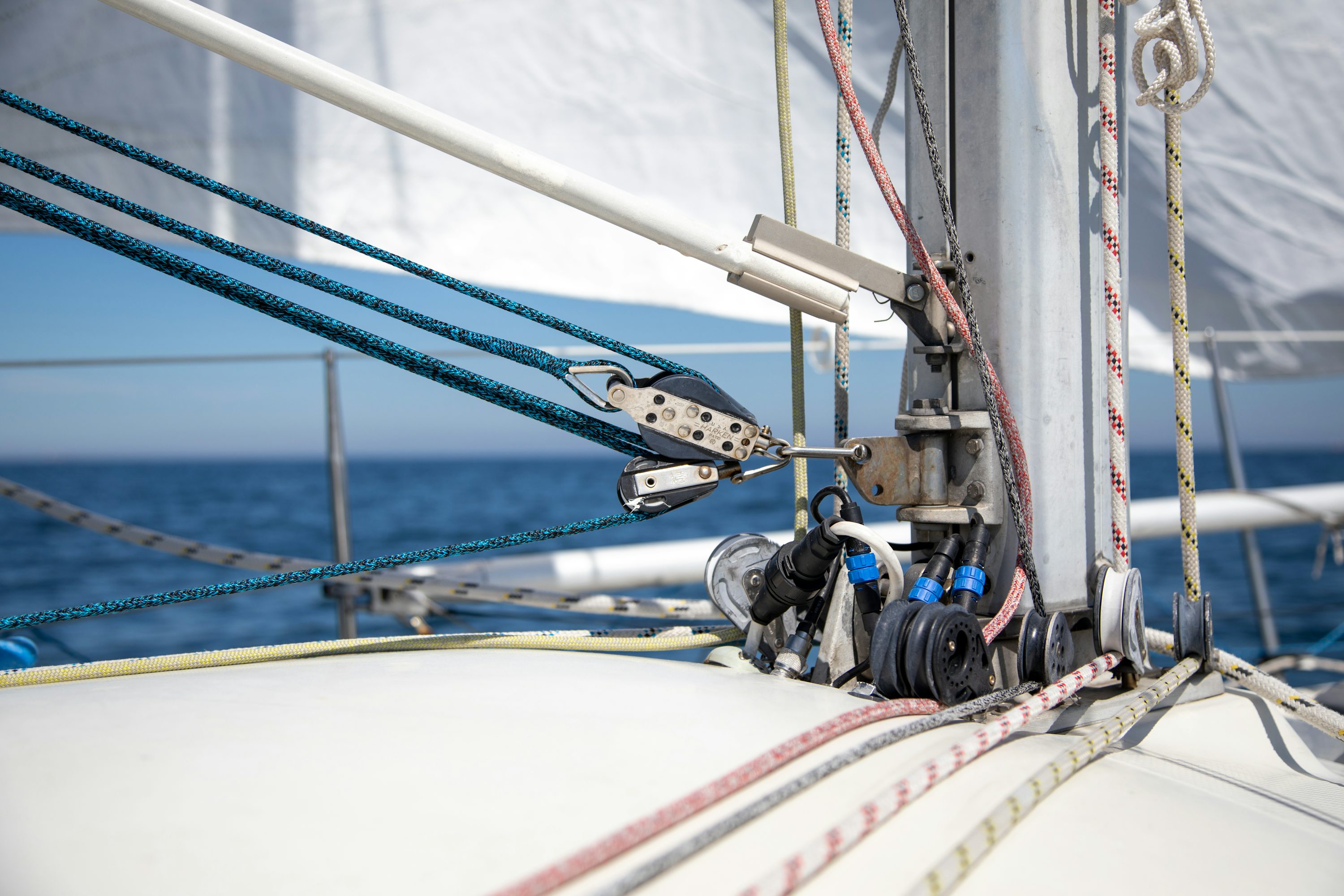
The Poetry of Rigging
Stand at the base of a sailboat's mast and look up. The web of wire and line that stretches above you is not merely mechanical infrastructure — it is the accumulated wisdom of thousands of years of seafaring, refined through countless ocean crossings into a system of extraordinary elegance and efficiency. Every shroud, every stay, every block and halyard has a purpose, and understanding that purpose is what separates the sailor who merely steers from the one who truly sails.
A well-tuned rig is a musical instrument. When the wind plays it correctly, the boat sings.
For the aspiring liveaboard or the new sailboat owner, learning the rigging is one of the most rewarding early investments of time and effort. It will make you safer, more confident, and more capable of getting the best performance from your vessel.
Standing Rigging: The Skeleton
The standing rigging is the fixed system of wire or rod that supports the mast and holds it in column. It does not move during normal sailing operations. The key components are:
- The forestay — The wire that runs from the bow of the boat to the top of the mast (or near the top). On most modern sailboats, the headsail (jib or genoa) is hanked onto or furled around the forestay. It is the forward support for the mast and one of the most critical pieces of rigging on the boat.
- The backstay — The wire that runs from the stern to the top of the mast, providing aft support. On many modern rigs, the backstay is adjustable, allowing the sailor to tension the forestay and control sail shape.
- The shrouds — The wires that run from the chainplates on the sides of the boat to the mast, providing lateral support. Most boats have both upper shrouds (running to the masthead) and lower shrouds (running to spreader bases).
- The spreaders — The horizontal struts that extend from the mast to spread the angle of the shrouds, increasing their lateral support. Spreader angle and length have a significant effect on rig tension and sail shape.
- The chainplates — The metal fittings bolted through the deck and hull structure that anchor the shrouds and stays. Chainplate failure is one of the leading causes of dismasting; they should be inspected annually and replaced at the first sign of corrosion or cracking.
Running Rigging: The Muscles
The running rigging is the system of lines (ropes) that control the sails. Unlike standing rigging, running rigging is constantly in use and must be inspected and replaced more frequently. The key components are:
- The halyards — Lines used to raise and lower the sails. The main halyard raises the mainsail; the jib halyard raises the headsail. Halyards run through blocks at the masthead and down to clutches or cleats at the base of the mast or in the cockpit.
- The sheets — Lines used to control the angle of the sails relative to the wind. The mainsheet controls the mainsail; the jib sheets (there are two, one on each side) control the headsail. Sheets are the lines you will use most frequently while sailing.
- The boom vang (kicker) — A line or hydraulic system that controls the vertical angle of the boom, preventing it from rising when sailing downwind and controlling sail shape.
- The cunningham — A line that attaches to the mainsail near the tack and allows the sailor to tension the luff of the sail, controlling draft position in varying wind conditions.
- The outhaul — A line that controls the tension along the foot of the mainsail, affecting the fullness of the sail's lower section.
- The reefing lines — Lines used to reduce the area of the mainsail in strong winds by pulling the sail down to a reef point. A well-practiced reef takes less than two minutes and can make the difference between a comfortable sail and a dangerous one.
Rig Inspection and Maintenance
A thorough rig inspection should be performed at least twice a year — before the sailing season begins and at the end of the season. The consequences of rigging failure at sea can be catastrophic, so this is not an area where corners should be cut. Key inspection points include:
- Check all swage fittings and toggle pins for cracks, corrosion, or distortion. Swage fittings are the most common point of failure in wire standing rigging.
- Inspect all turnbuckles for proper thread engagement and locking. Turnbuckles should be taped or seized after adjustment to prevent them from vibrating loose.
- Run your hand along every piece of standing rigging, feeling for broken strands (known as "meat hooks") that can cut your hands and indicate imminent failure.
- Inspect the masthead with binoculars or, ideally, by going aloft. Check the sheaves, the masthead light, the VHF antenna connection, and the attachment points for the forestay and backstay.
- Check all running rigging for chafe, particularly where lines run through blocks or over the deck. Replace any line that shows significant wear.
Photo by Shifaaz Shamoon on Unsplash