




A Covenant Between Sailor and Sea
To the uninitiated, the maintenance of exterior teak might seem like an endless, punishing chore — a weekend-consuming obligation that stands between the sailor and the pleasure of simply being on the water. But to the devoted sailor, it is something far more meaningful: an intimate conversation with the vessel that carries them safely across the sea. There is a deep, almost romantic satisfaction in restoring the golden honey hue to a piece of weathered wood — a tactile connection to the traditions of seafaring, a nod to the shipwrights of old who understood that beauty and function are inextricably linked on the water.
Every plank of teak on a classic sailboat is a testament to a philosophy that refuses to separate the practical from the beautiful.
The Process: Patience as a Virtue
The process requires patience — a virtue that the ocean teaches in abundance. It begins with careful cleaning, stripping away the gray oxidation of salt and sun to reveal the vibrant grain beneath. Then comes the sanding: methodical, rhythmic strokes that smooth the surface until it feels like satin under your fingertips.
The choice between oil and varnish is a deeply personal one, reflecting the sailor's philosophy about the relationship between maintenance and beauty:
- Teak Oil — Penetrates deep into the wood, nourishing from within. It produces a warm, natural matte finish that enhances the grain without creating a hard surface film. Oil is forgiving, easy to apply, and requires no sanding between coats. The trade-off is that it needs more frequent reapplication — typically every 3–6 months in tropical climates. Products like Deks Olje D1 and Cetol Marine are favorites among liveaboards for their ease of use and beautiful results.
- Varnish (Spar Varnish) — Creates a hard, glossy film on the surface that is extraordinarily beautiful when done well. A proper varnish job — 8 to 12 coats, each sanded between applications — produces a finish of breathtaking depth and clarity. It is more durable than oil in UV-intense environments, but it is also more demanding: any breach in the film allows water to penetrate and lift the varnish from beneath. Interlux Schooner Varnish and Epifanes are the gold standards. A well-maintained varnish job is a work of art.
- The Liveaboard's Compromise — Many long-term liveaboards opt for a hybrid approach: oil on horizontal surfaces (cockpit seats, side decks) where water pooling accelerates wear, and varnish on vertical surfaces (companionway trim, handrails, cap rail) where the finish can be maintained more easily. This pragmatic approach balances beauty with the realities of continuous life aboard.
Finally, the application itself: watching the wood drink in the finish, transforming instantly from dull to luminous, is one of the most rewarding sights in boat ownership. The scent of the varnish mingling with the sea breeze is the perfume of a well-loved ship.
The Step-by-Step Teak Restoration Process
- Clean thoroughly — Use a dedicated teak cleaner (two-part cleaners work best for heavily weathered wood) and a stiff brush. Always scrub with the grain to avoid raising fibers.
- Rinse and dry completely — Allow at least 24 hours of dry weather before proceeding. Moisture trapped under a finish will cause premature failure.
- Sand progressively — Start with 80-grit to remove the gray surface layer, then 120-grit to smooth, finishing with 220-grit for a silky surface. Always sand with the grain.
- Wipe down with a tack cloth — Remove all dust before applying any finish. Even a single grain of dust will show under varnish.
- Apply thin, even coats — Multiple thin coats are always superior to a single thick coat. Thin coats dry faster, cure harder, and are less prone to runs and sags.
- Sand lightly between coats — 320-grit between varnish coats creates a mechanical bond and removes any dust nibs. For oil, simply wipe off excess after 30 minutes.
- Protect from UV — Teak covers and sail covers extend the life of any finish dramatically. UV is the primary enemy of all exterior finishes.
A Declaration of Love
This labor of love is not merely aesthetic; it is an act of preservation and devotion. The teak protects the boat, and in return, the sailor protects the teak. It is a covenant between owner and vessel, renewed with every coat of oil and every careful stroke of the brush.
When you sit in the cockpit at sunset, the amber light catching the flawless finish of the cap rail you spent days perfecting, you realize that the effort was never really about the wood.
It was about honoring the vessel, taking pride in your floating home, and participating in the timeless ritual of seamanship. The brightwork of a well-maintained sailboat is not just a surface — it is a declaration of love.
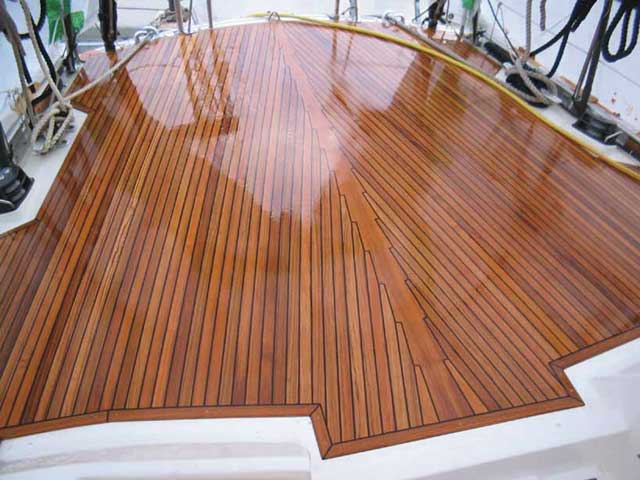
Photo by Dave Herring on Unsplash