




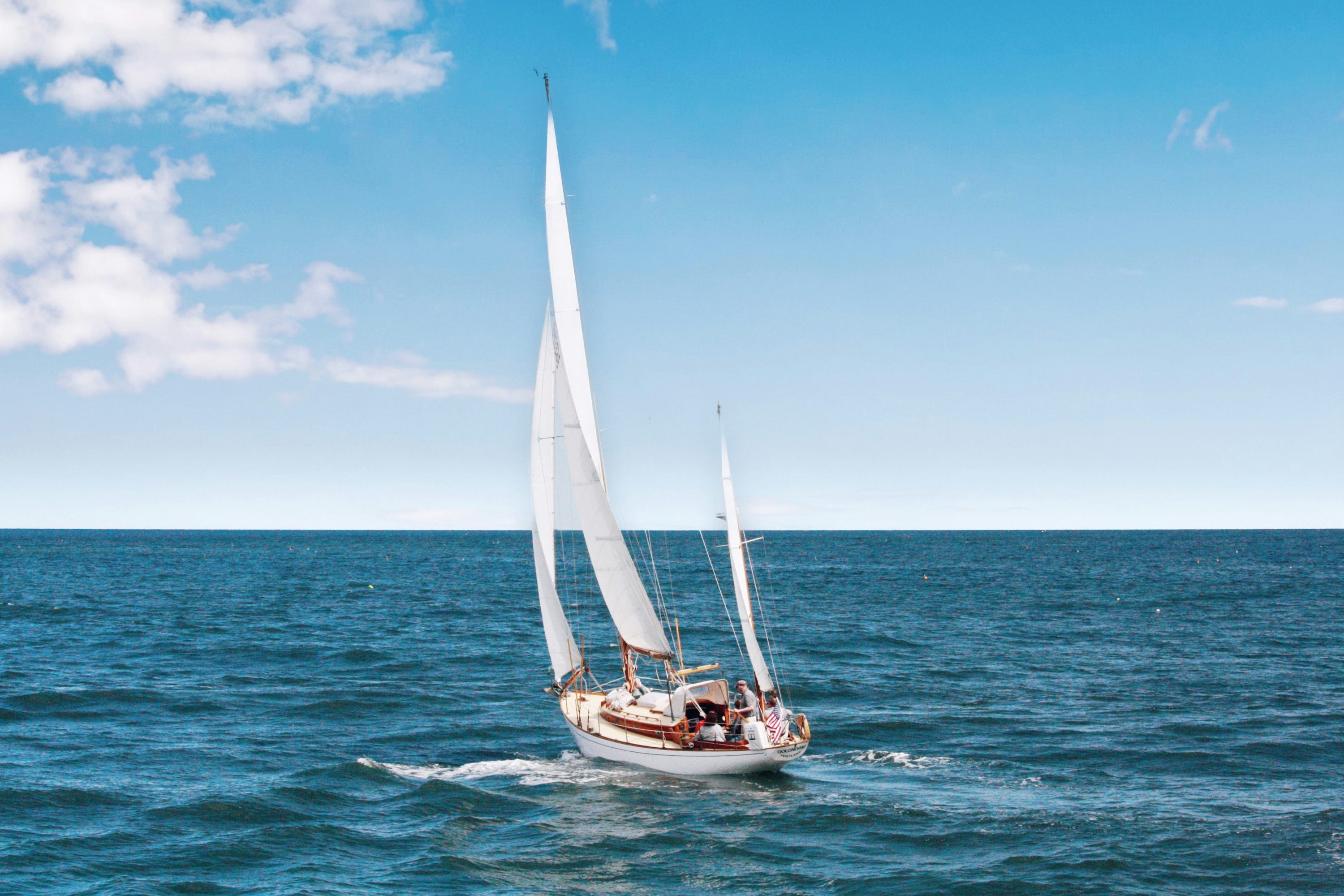
The Last Great Sailing Frontier
There are passages that change you, and then there is the South Pacific — a crossing so vast, so beautiful, and so profoundly humbling that sailors who have made it speak of it in hushed, reverent tones for the rest of their lives. To sail from the coast of Central America or Mexico to the Marquesas Islands is to cross 3,000 miles of open ocean with no land in between — a blue water passage that has defined the dreams of offshore sailors for generations. It is the passage that separates the coastal cruiser from the bluewater voyager, and it is the one that most liveaboards are quietly building toward from the moment they first step aboard.
"The Pacific is not just an ocean. It is a test of character, a school of seamanship, and the most beautiful classroom on earth."
Planning the Passage: The Milk Run
The classic South Pacific route — known affectionately as the Milk Run — follows the trade winds from Panama or Mexico westward through French Polynesia, the Cook Islands, Tonga, Fiji, and Vanuatu, before arriving in New Zealand or Australia. The timing is everything: most sailors depart the Americas between February and April to arrive in French Polynesia before the cyclone season begins in November.
The key waypoints and considerations for the passage include:
- The Panama Canal to the Galapagos — Many sailors make the Galapagos their first stop, a detour of approximately 900 miles from Panama. The islands are extraordinary — Darwin's laboratory, unchanged since the Beagle arrived. Permits are required and must be arranged in advance.
- The Galapagos to the Marquesas — The longest single passage on the Milk Run: approximately 3,000 miles of open ocean. With the southeast trades established, this is typically a 3-week passage. Carry enough food and water for 30 days. The arrival in Nuku Hiva or Hiva Oa is one of the most emotional moments in a sailor's life.
- The Marquesas to the Tuamotus — The Tuamotu Archipelago is a chain of low-lying atolls with treacherous passes that must be navigated at slack water. The diving is world-class, the anchorages are breathtaking, and the isolation is absolute.
- Tahiti and the Society Islands — Bora Bora, Moorea, Raiatea, Huahine. These are the islands of legend, and they live up to every expectation. The lagoons are impossibly blue, the mountains impossibly green, and the people impossibly welcoming.
- Tonga and Fiji — The final major stops before New Zealand. Tonga offers some of the finest sailing in the Pacific, with hundreds of islands to explore. Fiji is the crossroads of the Pacific cruising community, with excellent provisioning, a warm culture, and spectacular diving.
The Boat and the Preparation
A blue water passage demands a blue water boat. This does not mean the most expensive yacht in the marina — it means a well-found, well-maintained vessel with a proven offshore track record. The most popular blue water sailboats are production cruisers in the 35–50 foot range: the Hallberg-Rassy, the Oyster, the Beneteau Oceanis, the Jeanneau Sun Odyssey, and the Catalina 42 are all proven performers. What matters more than the brand is the condition: the rigging, the sails, the engine, the watermaker, and the safety equipment must all be in excellent order before you leave sight of land.
The provisioning for a 3-week offshore passage is a serious undertaking. Plan for 30 days of food and water, carry spare parts for every critical system, and ensure your crew is trained in heavy weather sailing and emergency procedures. The Pacific will test you — not to break you, but to show you what you are made of.
Every mile of open ocean teaches you something about yourself that no classroom ever could. The South Pacific teaches you everything.
Photo by Mael BALLAND on Unsplash