




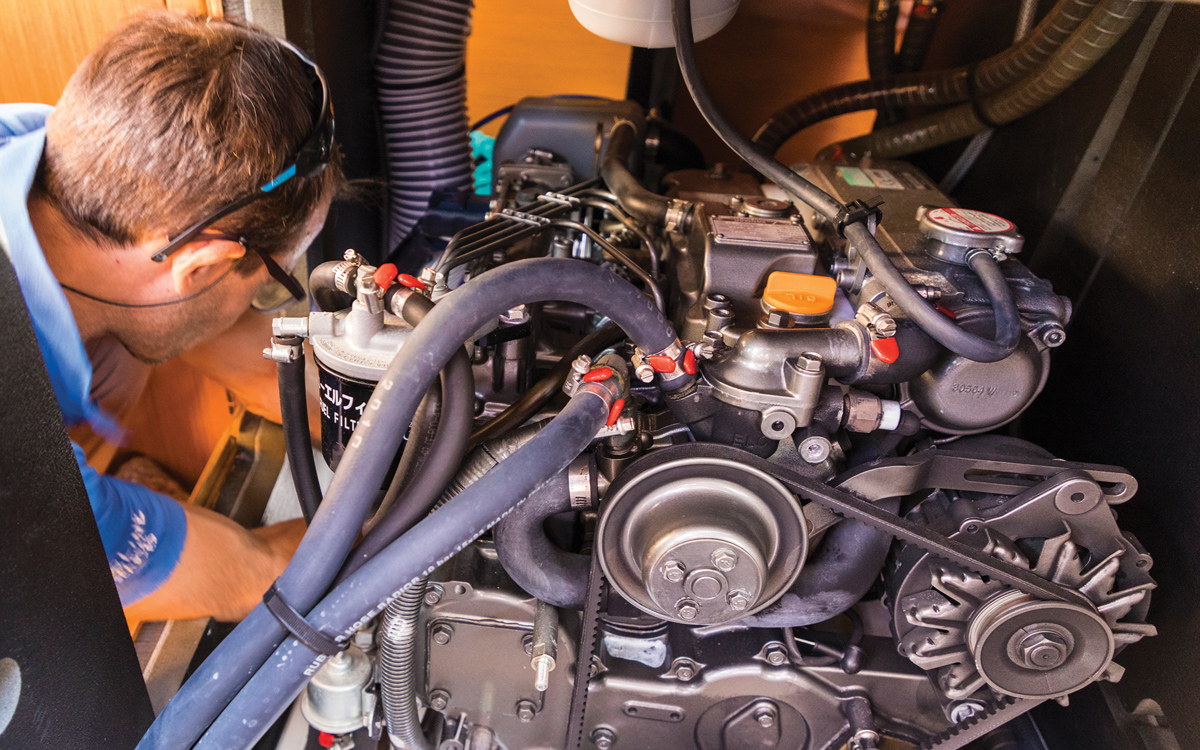
The Heartbeat Below Decks
Sailors are romantics. We speak of wind and tide, of stars and sails, of the poetry of a boat moving through water under canvas alone. And yet, beneath the floorboards of almost every cruising sailboat, there beats a very practical heart: the marine diesel engine. It is the unglamorous workhorse that gets you in and out of tight anchorages, charges your batteries, pushes you through calms, and — most critically — brings you home when the wind fails and the weather turns.
A sailor who understands their engine is a sailor who is never truly stranded. A sailor who ignores it is simply waiting for a bad day at sea.
The Essential Maintenance Schedule
The marine diesel is a remarkably reliable machine when properly maintained. The key word is properly. Here is the maintenance schedule that every liveaboard and cruising sailor should follow religiously:
Every 100 Hours (or Annually)
- Change the engine oil and oil filter — use only the manufacturer-specified grade
- Replace the fuel filter (primary and secondary) — contaminated fuel is the #1 cause of engine failure at sea
- Inspect and replace the raw water impeller — this small rubber component is critical for cooling and fails without warning
- Check and tension the alternator and raw water pump belts
- Inspect all hose clamps for corrosion and tightness
- Check coolant level and condition; top up with the correct antifreeze mix
- Inspect the exhaust system for leaks, cracks, or carbon buildup
Every 500 Hours
- Drain and replace the coolant; flush and inspect the heat exchanger for scale buildup
- Inspect and change the transmission fluid if discolored or overdue
- Check all engine mounts for deterioration, cracking, or excessive movement
- Inspect the shaft seal (stuffing box or dripless seal) and cutlass bearing for wear
- Have injectors tested and serviced by a qualified diesel mechanic
- Inspect the turbocharger (if fitted) for shaft play and oil leaks
Every Season (Before Commissioning)
- Change the zinc anodes on the heat exchanger and shaft
- Inspect all through-hulls and seacocks — exercise them to prevent seizing
- Test the bilge pump and float switch
- Check the battery bank voltage, connections, and electrolyte levels
- Run the engine at operating temperature and check for any unusual sounds, smells, or smoke
Reading Your Engine's Signals
A well-tuned sailor learns to listen to their engine the way a doctor listens to a patient's heartbeat. The diesel communicates constantly through sound, smell, and the color of its exhaust. Learn these warning signs:
- White smoke — Water or coolant entering the combustion chamber. Stop the engine and investigate immediately — this can indicate a blown head gasket.
- Black smoke — Over-fueling or a restricted air intake. Check the air filter and fuel system.
- Blue smoke — Oil is burning. Check the oil level and inspect for internal leaks.
- Rising temperature gauge — Cooling system failure. Stop the engine before serious damage occurs. Check the raw water impeller first.
- Unusual vibration — Could indicate a fouled or damaged propeller, a bent shaft, or a failing engine mount.
- Low oil pressure warning — Stop the engine immediately. Running with low oil pressure causes catastrophic damage within minutes.
The Zen of the Engine Room
There is a particular kind of satisfaction that comes from a clean, well-organized engine room. It is the satisfaction of a sailor who takes their vessel seriously — who understands that seamanship is not just about sailing, but about the whole system that keeps the boat and crew safe. Paint your engine room white so that leaks and drips are immediately visible. Keep it clean and dry. Know where every valve, seacock, and through-hull is located. Practice your emergency procedures until they are muscle memory.
The sailor who loves their engine will find that the engine, in turn, loves them back. It will start on the first turn of the key in a cold anchorage at 0500. It will push you through the windless miles between islands. It will charge your batteries so the nav lights burn bright and the chartplotter guides you safely home. Respect the engine. Learn its rhythms. And it will never let you down.
The engine room is not the most romantic part of the boat. But it may be the most important room you will ever know.
Photo via Unsplash — unsplash.com/s/photos/boat-motor